The Overlooked Logic Behind Sustainable Revenue
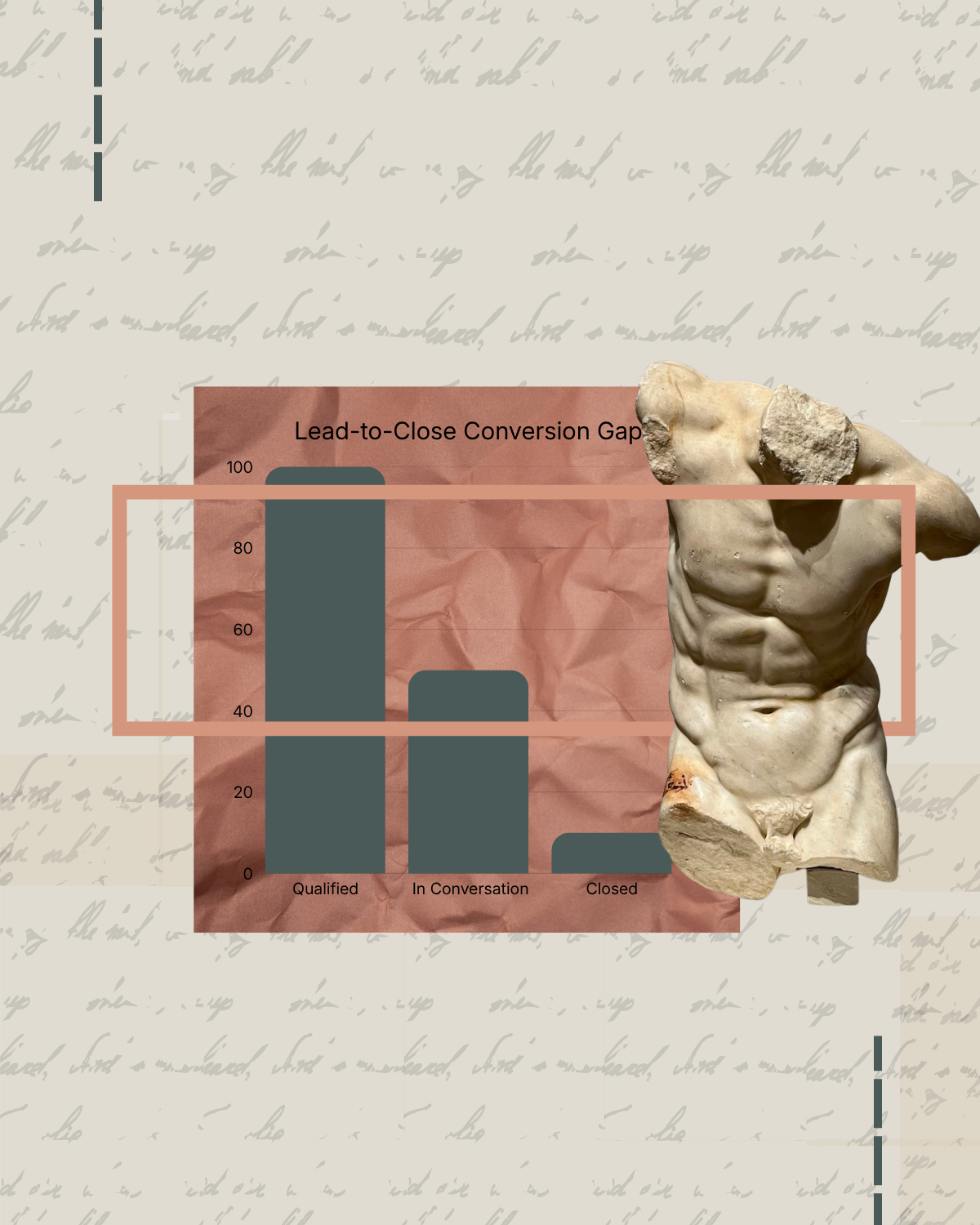
Visibility, campaigns, and inbound leads don’t scale revenue; only a structured commercial system does.
Why Sales Activity Won’t Scale: Structuring a B2B Commercial System for Sustainable Growth
AI, automation, segmentation, email campaigns, and social media are powerful tools. They generate visibility and opportunities, but they do not create a commercial system on their own.
If marketing generates interest and events generate leads, is there a sales function able to take care of the people who respond?
If marketing underperforms, is there a sales-driven feedback loop capable of educating and adjusting the marketing strategy?
Is there a marketing funnel that builds interest over time, and a sales funnel that engages customers when they are ready to talk?
If customers show interest, is there a clear qualification logic to identify the right ones to target?
If potential customers engage, is the value of the offer clearly communicated and understood?
If a conversation starts, is there a structured process that guides them from interest to decision?
If questions or objections arise, is there a sales function able to address them, support the evaluation process, and build trust for a long-term business relationship?
Sales as a Revenue Function
Sales is the only function whose sole responsibility is to generate revenue.
Not revenue at any cost, but revenue, generated clearly and responsibly. Everything within a commercial system - messaging, pricing, processes, interactions, to overall setup - must support that outcome.
There are customers for every solution. The role of a commercial system is to find them, guide them, and approach them in the most effective way—using the right tools and a structure that supports them before, during, and after the sale.
A well-designed commercial function also has a second role: to identify misalignment.
Sales is where strategy meets reality, where the company’s assumptions are tested against the market.
A structured commercial system does not ignore friction or gaps. It uses them. If deals do not move forward, there is a reason: the wrong customers are being targeted, the value is unclear, the pricing is not aligned, or the process is not working.
Core Components of a Scalable B2B Commercial System
A commercial system is not defined by the tools being used, but by how they are structured and connected. It consists of a set of elements that must work together to turn interest into revenue.
Pricing Strategy and Sales Funnel: Aligning Value, Qualification, and Conversion
Every commercial system starts with clarity around the offer.
This means understanding the solution in depth, identifying the right customers, and defining pricing and sales logic aligned with the business model. Pricing is not just a number. It shapes how customers perceive value and directly affects margins and how profitable each deal is.
The sales funnel is not just a list of stages. It defines how opportunities are generated, how they are qualified, and how they move forward. It determines how quickly deals move from first contact to closing.
If this structure is unclear, everything that follows becomes inconsistent.
Inbound and Outbound Strategy
There are buyers for every solution, but reaching them requires more than sales activity.
A clear Ideal Customer Profile is essential. This means understanding not only company size or industry, but also the problems they face, how they make decisions, and when your solution becomes relevant.
Outbound and inbound activities should be built on this clarity: Channels, messaging, and workflows need to be consistent over time.
Without this, companies often increase activity while reducing efficiency, spending more to acquire customers without improving results.
Consultative Sales Approach: Turning Interest into Decisions
Interest alone is not enough.
Once a potential customer engages, the interaction becomes critical, especially in B2B environments, where decisions take time and involve multiple stakeholders. They require clarity, alignment, and trust. A consultative sales approach structures this process. It helps the customer understand the problem, evaluate the solution, and move toward a decision.
The objective isn’t to push for a quick sale, but to support a clear and informed decision.
What I’ve seen across different companies is that significant effort goes into generating interest, but without a structured way to guide the next steps, that interest rarely turns into actual revenue.
Sales Operations and Documentation: Reducing Friction in the Sales Process
Operational structure is also often underestimated.
Contracts, terms and conditions, compliance requirements, and financial frameworks are not secondary elements, they are integral parts of the commercial system. If they are unclear or inconsistent, they introduce friction at critical stages of the sales process.
Clear templates, consistent documentation, and defined internal processes make it easier to move from conversation to closing.
Post-Sales Strategy: Upselling, Cross-Selling, and Customer Expansion
The commercial process does not end with the deal.
Having worked with many different companies and sales teams, I’ve seen that companies often invest heavily in generating leads but spend little time developing existing customers. A structured post-sales approach ensures that customers are supported after the purchase and that new opportunities are identified over time—whether through upselling or cross-selling.
This is not only more efficient, but it also increases the total revenue generated by each customer.
How I Support B2B Companies in Building a Commercial System
Building a commercial system is about creating alignment between the business model, the offer, and the way revenue is generated.
My work focuses on structuring this alignment.
In some cases, this means building the commercial system from the ground up. In others, it means identifying where the system already exists but is fragmented or not working as expected.
The starting point is often the same: understanding how revenue is currently generated, where deals slow down or get lost, and which parts of the process are not connected. From there, the work typically develops across a few core areas.
First, clarifying the commercial foundations. This includes defining or refining the Ideal Customer Profile, structuring how leads are qualified, and aligning pricing and positioning with the business model, so that the right customers are targeted and the value of the offer is clear.
Second, structuring the sales funnel and go-to-market approach. This means defining how opportunities are generated, how they move through the sales funnel, and how outbound and inbound activities support each other, so that the pipeline becomes more consistent and easier to manage.
Third, improving the quality of sales interactions. This involves building a consultative approach that helps customers move from initial interest to a decision, increasing the likelihood that opportunities convert into revenue.
Fourth, reducing operational friction. Contracts, pricing structures, and internal workflows are aligned to support the sales process, making it easier to move from first conversation to closing.
Finally, extending the system beyond the sale. Post-sales processes are structured to support implementation, retention, and expansion, so that each customer generates more value over time.
Depending on the context, this can be addressed through focused project-based work or broader ongoing collaboration.