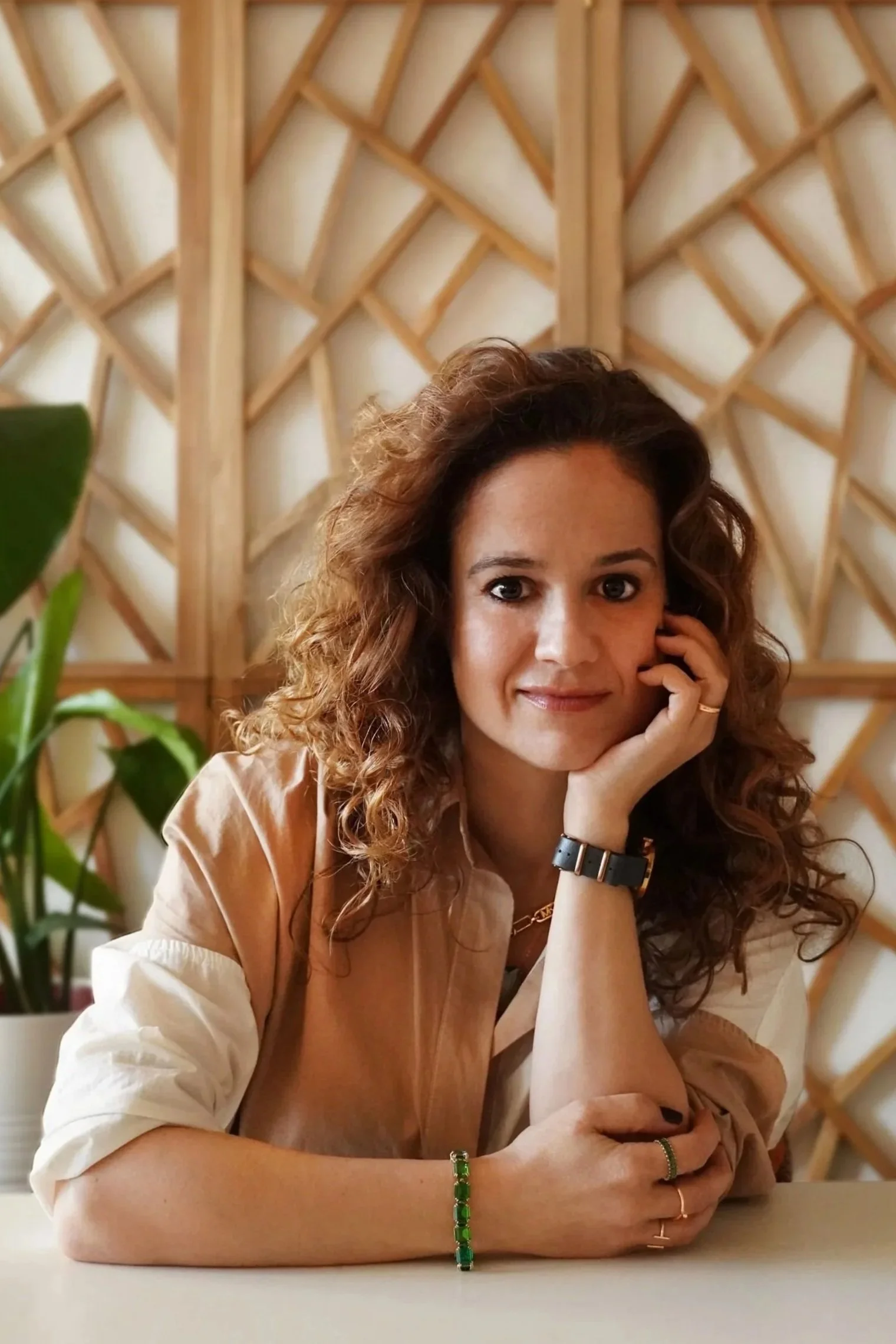
Hi, I’m Natalia
Fractional Sales Leader for B2B SaaS & Tech
I work with B2B SaaS founders and entrepreneurs to build commercial systems that enable sustainable growth.
As an external commercial partner, I step into early-stage companies as a Fractional Head of Sales, Chief Sales Officer (CSO), or Senior Sales Consultant. I design and implement both the commercial strategy and the operational execution that early-stage companies need before making a permanent hire.
About My Work
Early-stage B2B SaaS founders and leadership teams need a commercial structure that makes revenue generation predictable and scalable. I build and operationalize this commercial structure.
My work covers every part of the sales cycle, from defining how leads are qualified, to building sales workflows, enabling sales teams, and aligning sales and marketing.
I have 15+ years of experience across business development, sales management, account management, and commercial operations, working with both start-ups and established international companies.
My academic background is in translation, which continues to shape my commercial approach. I apply translation principles to sales by helping companies make their offer clear and accessible, translating technical complexity into customer understanding, and turning strategic ideas into executable commercial processes.
To understand this approach, it is useful to look at how sales has changed over time.
In the past, sales was mainly about persuasion. Sellers focused on convincing buyers to choose their solution, often with limited access to information on the buyer side.
Later, frameworks like SPIN Selling introduced a more structured, consultative approach,
“where the salesperson’s role was not only to persuade, but to ask questions, understand the customer’s situation, and help them identify their problem and potential solutions - Neil Rackham, SPIN Selling (McGraw-Hill, 1988).”
Even in this model, however, the salesperson still had a strong informational advantage, because buyers did not have easy access to detailed product and market information.
Today, this has changed. With AI-powered search, generative AI tools, and AI-enhanced search results buyers often enter sales conversations with a strong understanding of the market. They have already explored technologies, compared platforms, evaluated vendors, and formed initial views on how different innovations could address their specific business challenges.
The challenge is therefore no longer access to information, but making sense of it: distinguishing meaningful differences, evaluating trade-offs, and making confident strategic decisions in an increasingly complex landscape. Sales supports this by connecting business objectives with the right solution and guiding decision-making through expertise rather than information asymmetry.
At the same time, on the supply side, the same technological advances that have transformed how customers buy have also transformed how SaaS companies build and evolve their offerings. AI-driven capabilities, scalable cloud infrastructure, and CI/CD-based development practices enable companies to adapt products more quickly to changing market needs, shorten innovation cycles, and respond faster to customer feedback.
As products evolve more rapidly, commercial structures must evolve at the same pace. Positioning, qualification, messaging, and sales execution can no longer remain static. Without alignment between product evolution and commercial activities, innovation and customer-facing functions drift apart, often reinforced by functional silos between product, marketing, and sales, reducing clarity, consistency, and revenue predictability.
Commercial structure is the operating system that keeps product evolution and go-to-market aligned as both markets and products change faster than before.
About Me
I’m originally from Lecce, in the south of Italy. After completing my degree in translation (specializing in English and French), I decided to move to Germany to start my professional journey. I chose Munich as a starting point, drawn by the city’s strong economy, international environment, and the opportunity to immerse myself in a culture full of challenges and growth.
That’s where my German studies began, a long and winding path that started at the local Volkshochschule in Munich and eventually made it my second working language after English.
Over the years, I’ve lived and worked in several German cities, from Munich to Burgbernheim to Bielefeld, where I met my husband. Since 2018, we’ve been based in Berlin, where we currently work and live with our two daughters.
My Approach